The crowdfunding industry has matured.
Kickstarter has facilitated billions of dollars in cumulative pledges and hundreds of thousands of successfully funded campaigns since 2009. Indiegogo has built a parallel category. Between them, they have funded a generation of consumer products that would not have existed under traditional retail gatekeeping.
The funding problem is solved.
The next problem is not.
If you have spent any time inside the hardware crowdfunding category, you already know what it is. Pledges arrive in a week. Manufacturing arrives roughly a year later. Between those two milestones is the window where consumer-product creators take their biggest preventable damage: missed ship dates, defects, refund spikes, returns, federal recalls, and the kind of public reputation hit that compounds in a way no other go-to-market channel produces.
That window is where outside Quality Engineering belongs. Almost no crowdfunded creator gets it.
This is the structural risk inside an otherwise impressive industry, and it is solvable.
Where the industry is genuinely strong
Crowdfunding deserves credit. The platform model has done several things that traditional retail couldn’t.
The platform model surfaced real demand before manufacturing started. Creators get a real signal at funding time, not after committing six months of inventory capital to a buyer’s bet.
Categories that retail buyers wouldn’t fund found their first home there. The most interesting consumer-hardware launches of the last decade have come out of crowdfunding, not Target’s vendor pipeline.
And the backer community participates in product development in a way no other channel offers. That feedback loop is genuinely useful, and the comments tab on a successful campaign holds real product-market-fit signal.
These are real strengths. The risk side does not negate them. It sits next to them.
Where the industry is structurally exposed
The same conditions that make crowdfunding work create a specific risk shape that traditional consumer-product channels don’t carry.
The creator is usually a first-time consumer-product manufacturer. Their domain expertise is in the product itself, not in supply chain, supplier QA, or federal regulatory exposure. They have no in-house Quality Engineering function because they have a team of four to eight people, and none of them have ever shipped a regulated consumer product before.
The manufacturing window is short and the budget is committed. Once the PO clears, the creator has limited room to iterate. A spec change after the deposit goes out becomes a tooling change, or a delay, and the backers are already counting weeks.
The reputation surface is public. A defect that surfaces after shipping doesn’t get absorbed by a faceless retailer return policy. It surfaces in the comments tab of the original campaign, on Reddit, and in YouTube tear-downs.
The category has a federal recall history. Crowdfunded hardware has produced consumer-electronics recalls, battery-thermal-event recalls, child-safety recalls, and product-pull notices from CPSC, FDA, and NHTSA. The cases are publicly documented. Each one carried damage that would have been catchable in a documentation review months before shipping.
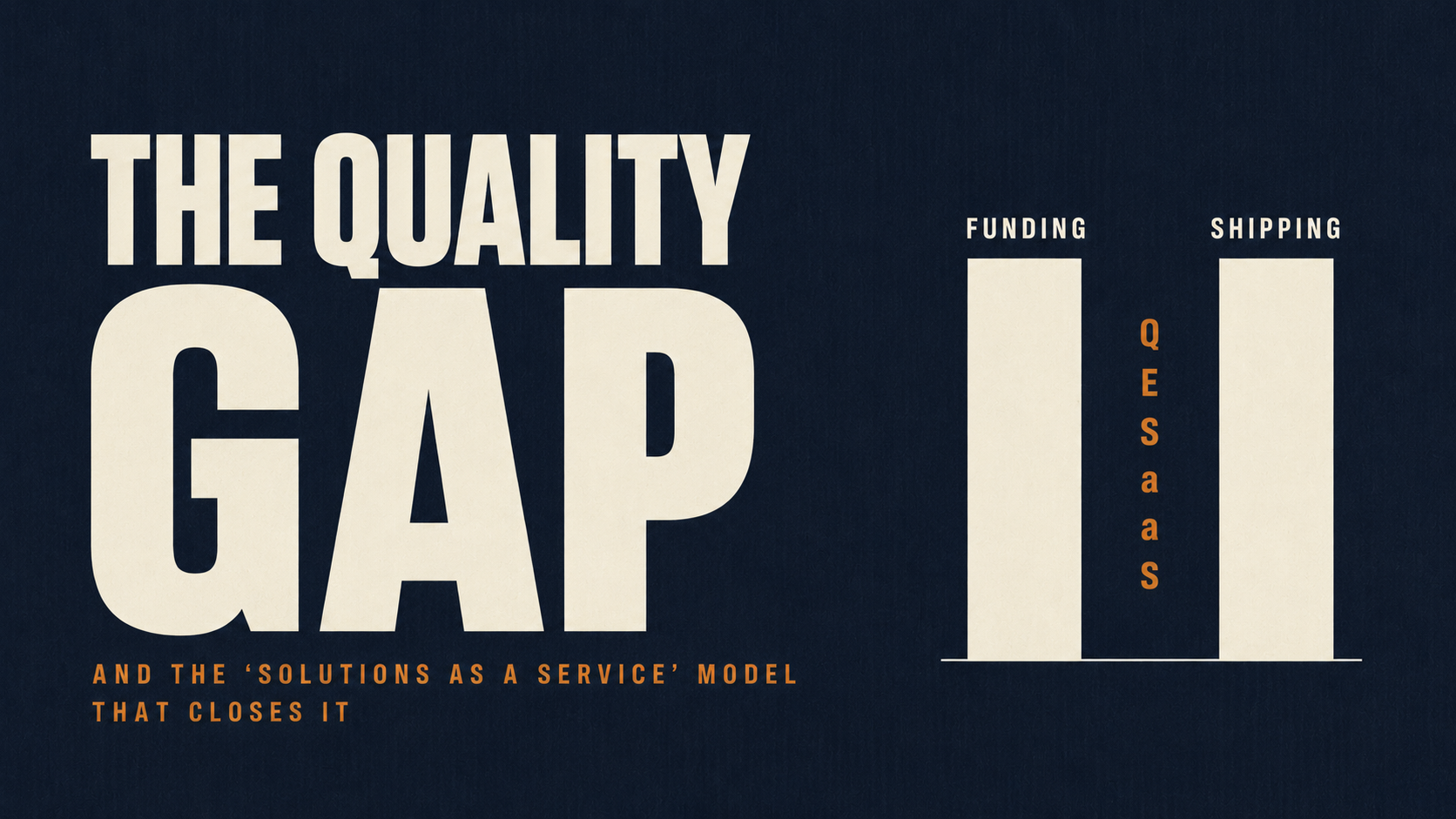
This is the gap. Funding is mature within the industry. Quality validation between funding and fulfillment is not.
Why traditional Quality Engineering didn’t fill the gap
Outside Quality Engineering is a real profession. Senior QEs in regulated industries (medical devices, aerospace, automotive) routinely run pre-launch reviews that catch exactly the failure modes that hit crowdfunded creators after shipping.
The reason crowdfunded creators have not used these services is structural, not cultural.
A traditional pre-launch QE engagement looks like this:
- A boutique consulting firm: $20,000 to $50,000 per engagement, four to eight weeks
- A Big 4 consulting practice: $50,000 plus, two months or longer
- A full-time senior QE hire: $150,000 plus salary, six months to productivity
A crowdfunded creator with a $200,000 raise, a four-month ship date, and a PO going out next Friday cannot afford any of those options. The economics and the timeline make traditional service inaccessible.
The result is that the creators most exposed to recall risk are the creators least able to engage senior QE help, under the only delivery models that historically existed.
That is the gap.
Why “Quality Engineering Solutions as a Service” is the answer
The software industry already worked through this shape. Custom enterprise software was expensive, slow, and tied up six months of professional services time. SaaS productized the offering: fixed scope, fixed price, fixed onboarding, subscription pricing, faster delivery, lower total cost. The same buyers who could not afford the custom version could afford the productized one.
Quality Engineering Solutions as a Service is the same shift applied to senior QE work.
The scope is productized. The Pre-Launch QA Audit follows a 10-point methodology that is available at qesaas.com/the-qa-audit. Every engagement covers the same 10 categories. The creator knows what they are getting before the engagement starts.
The price is fixed. $1,500 standard, $750 for the first three engagements in exchange for a written testimonial. No retainer. No discovery-call quote. No surprise scope expansion. No staffing assumptions that change halfway through delivery.
The turnaround is one week from kickoff. Crowdfunded creators are operating on weekly cycles. Six-week engagements don’t fit. One-week engagements do.
The data infrastructure is included. Federal recall pipelines for CPSC, FDA, USDA, and NHTSA feed the manufacturer track record and category recall history sections of every audit. The creator gets the same federal data layer that powers RecallSentry™, our consumer-facing recall app. A single boutique consultant cannot build that infrastructure for one engagement. A productized service can amortize it across every engagement.
The seniority does not get diluted. This is the failure mode of most productized services: the price comes down and a junior team does the work. The audit is run by a senior Quality Engineer with 20+ years across medical devices, aerospace, automotive, and consumer goods. Twenty years of pattern recognition is what produces a useful pre-launch review. A productized service can scale the delivery model without diluting the engineer.
The phrase “Solutions as a Service” is doing real work here. It points at a delivery model that fits the buyer who needs the help, with senior depth that fits the buyer who actually pays for it. The subscription-pricing connotation is incidental. The category shift is the point.
Where this leaves the industry
The funding side of crowdfunding is mature and well-served. The quality validation side is structurally exposed and historically underserved.
The opportunity sits in productizing a piece of the senior-QE function so that it fits the buyer’s economics and timeline without diluting the depth. Adding more QA services priced like the old ones won’t close the gap.
If you are a creator inside the pre-PO window right now, the audit exists and the pricing is set. You are not stuck choosing between $30,000 of boutique consulting that you can’t afford and shipping with crossed fingers.
If you work in the crowdfunding industry in any other capacity (a platform partner, a fulfillment 3PL, a buyer-side ops team, a consumer-product accelerator), the gap is real and worth talking about. The industry has the funding rails. The quality-validation rail is still being built.
That is the work.
Full audit detail: qesaas.com/services-pre-launch-audit
The 10-point methodology in full: qesaas.com/the-qa-audit
If you are inside that pre-PO window right now, send your spec sheet. The first half of any scoping call is figuring out whether the audit is worth your money. We will tell you if it isn’t.
Want this kind of analysis on a product you're shipping or a regulatory situation you're sitting in? Email Mark or book a scoping call. Initial conversations are free and NDA-able.
← All articles